
Union County Arrest Records and Court Charges
Arrest records begin with law enforcement and custody activity. In Union County, immediate custody information may come from the Sheriff's inmate portal or Detention Center channels. The court charge record begins when a charge is filed, heard, or prosecuted in a court channel. Magistrate Court is especially important because it issues arrest and search warrants, conducts bond hearings, and holds preliminary hearings for General Sessions cases.
The distinction matters. A jail booking or hold reason can show why someone is in custody, but it is not the full court file. A charge record can show what the prosecutor or court is pursuing, but it is not always the final outcome. For current custody and booking detail, use the jail and Union County inmate records channel. For the full prosecution file, motions, plea, disposition, and sentence, use the criminal court record.
How to Find Union County Arrest Records and Charges
Check three places over time. First, the Union County Sheriff inmate portal may show current custody, hold reason, held-for agency, or jail status. Second, Magistrate or Bond Court may hold warrant, bond, and preliminary-hearing details. Third, the Public Index and Clerk of Court file may show the General Sessions case once prosecution is filed. These channels update on different schedules, so a new arrest may appear in custody systems before it appears as a court case.
- Search the custody channel if the question is whether the person is currently held.
- Contact Magistrate Court for warrant, bond, and preliminary-hearing context.
- Search the Union County Public Index for filed charges, case status, and court events.
- Check the charge list line by line for status, disposition, amendments, or reductions.
- Use the Clerk of Court or the originating summary court for certified copies or records not visible online.
SLED CATCH can provide a South Carolina name-based criminal-history report, but it does not include wanted-person information and it is not a Union County court file. The Public Index requires cookies and JavaScript, with popup exceptions sometimes needed to open case detail.
How Charges Get Filed After an Arrest
After an arrest, the first public-facing record may be custody, warrant, or bond information. The formal charge record develops through the court. In Union County, Magistrate Court can issue warrants, set bond, and handle preliminary matters. General Sessions prosecutions are handled by the Sixteenth Judicial Circuit Solicitor. Municipal charges may remain in City of Union Municipal Court or Jonesville Municipal Court when they are city-level offenses.
| Document or Event | Who Uses It | What It Shows |
|---|---|---|
| Arrest warrant | Magistrate Court and law enforcement | Judicial authorization for arrest and the alleged offense basis. |
| Bond record | Magistrate or Bond Court | Release conditions, bond amount, court appearance, or custody continuation. |
| Preliminary hearing | Magistrate Court | Early review tied to whether a higher-level case moves toward General Sessions. |
| Indictment or formal charge | General Sessions and Solicitor | The charge pursued in the prosecution file. |
| Municipal citation or charge | Municipal Court | City traffic, ordinance, or lower-level criminal matter. |
The Union County Magistrate Court page is the official source for warrant, bond, preliminary hearing, summary criminal, traffic, and small civil authority.
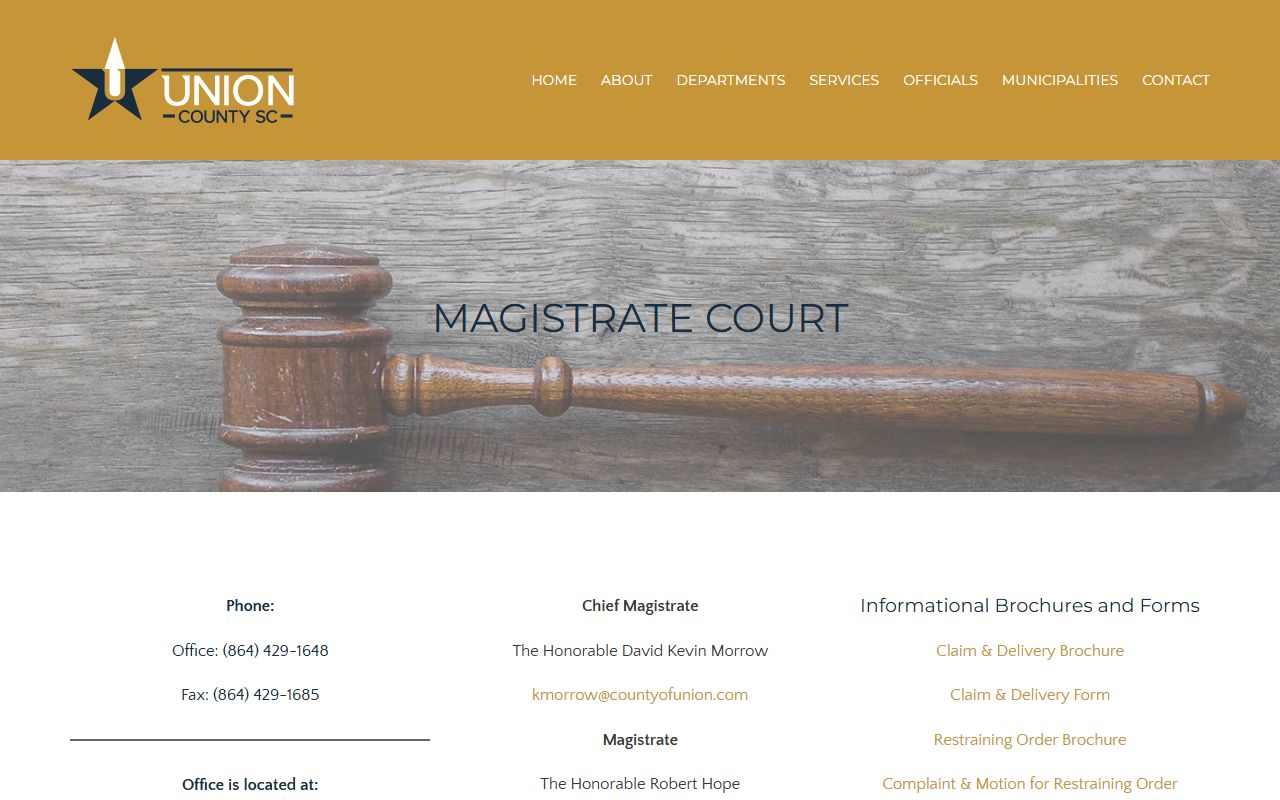
That makes Magistrate Court the practical bridge between arrest activity and later court charge records.
Charge Status and What It Means
Charge status can change as the prosecutor reviews the case, evidence develops, a plea is negotiated, or the court rules on motions. One arrest can produce multiple charges, and each charge can have its own outcome. Read status fields together with the disposition, docket date, and court level.
| Status | What It Means |
|---|---|
| Pending | The charge is open or has not reached a final public outcome in the court record. |
| Amended or reduced | The original charge was changed, often through prosecutor review, plea negotiation, or court action. |
| Dismissed | The charge ended without a conviction on that charge. |
| Nolle prossed | The prosecutor declined to continue prosecution of that charge. |
| Guilty or convicted | The charge ended in a guilty plea, verdict, or conviction-related disposition. |
Charges vs. Convictions
Being arrested or charged is not the same as being convicted. A Union County court charge record can show a charge that was later dismissed, nolle prossed, reduced, or resolved by not-guilty finding. A conviction is tied to a guilty plea, guilty verdict, or other final conviction outcome.
| Charge | Conviction | |
|---|---|---|
| Meaning | An accusation filed or pursued in court | A final guilty result by plea or verdict |
| Timing | Appears before final outcome | Appears after final outcome |
| Record risk | May remain visible unless dismissed records qualify for expungement | May affect sentence, probation, fines, and criminal history |
| How to verify | Read charge status and docket events | Read disposition and sentence fields |
Sealed vs. Expunged Arrest and Charge Records
South Carolina expungement can remove qualifying arrests, charges, or convictions from public record access through a court order that seals or destroys state records. Juvenile records are not ordinary public records, and the Judicial Branch has a separate juvenile expungement process. Public court searches should not be treated as complete where sealing, expungement, or juvenile confidentiality applies.
| Sealed | Expunged | |
|---|---|---|
| Public access | Restricted by law or court order | Removed from ordinary public access by statutory process and order |
| Typical records | Juvenile, sensitive, family-related, or court-restricted material | Eligible dismissed, nolle prossed, not-guilty, juvenile, or other qualifying criminal matters |
| Local process | Depends on the court and record type | General Sessions applications route through the Sixteenth Circuit Solicitor; summary court rules differ |
The juvenile expungement page is relevant where an arrest or charge involved a juvenile record rather than an ordinary adult public case.
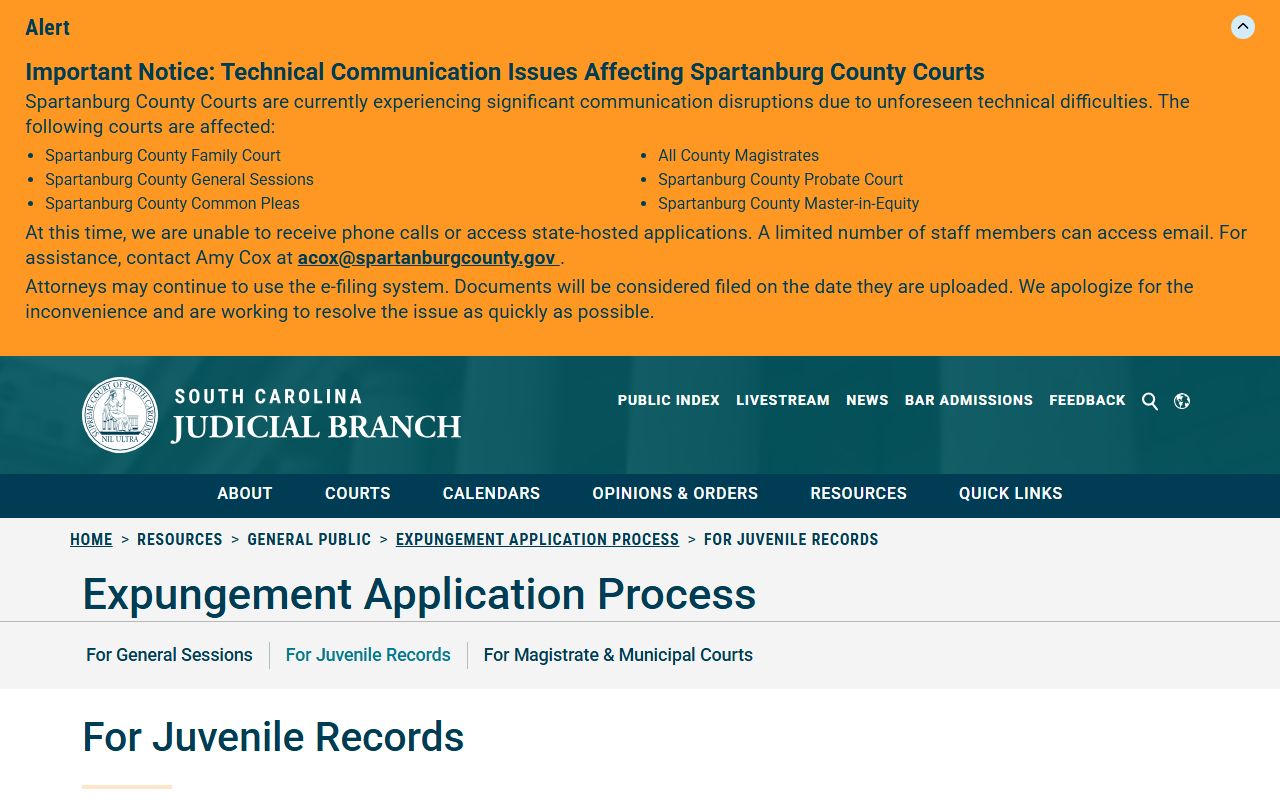
Juvenile record access and expungement should be handled through the official process, not through ordinary public charge searches.
Charge Codes and Severity Levels
Union County charge records can show the charge description, statute or ordinance, court, arresting or issuing agency, bond, court date, disposition, and sentence. The same arrest can create several separate charge lines. General Sessions charges are prosecuted by the Solicitor, while summary criminal, traffic, and ordinance charges may remain in Magistrate or Municipal Court. A traffic charge can also have a separate SCDMV driver-record consequence.
When reading a charge code, match it to the court level and final disposition. A felony-level General Sessions charge, a Magistrate Court criminal domestic violence case, a City of Union citation, and a Jonesville municipal ordinance case are different records even if they involve the same person.
Statewide Charge and Criminal History Lookups
SLED CATCH is South Carolina's name-based criminal-history report system. It is separate from Union County's Public Index, Sheriff's custody portal, and Clerk file. The Sheriff's Office links SLED background checks and notes that background checks can be accessed through SLED. SLED CATCH also states that wanted-person information is not included, so it should not be used as a warrant search.
SLED CATCH is the official state source for name-based South Carolina criminal-history reports.
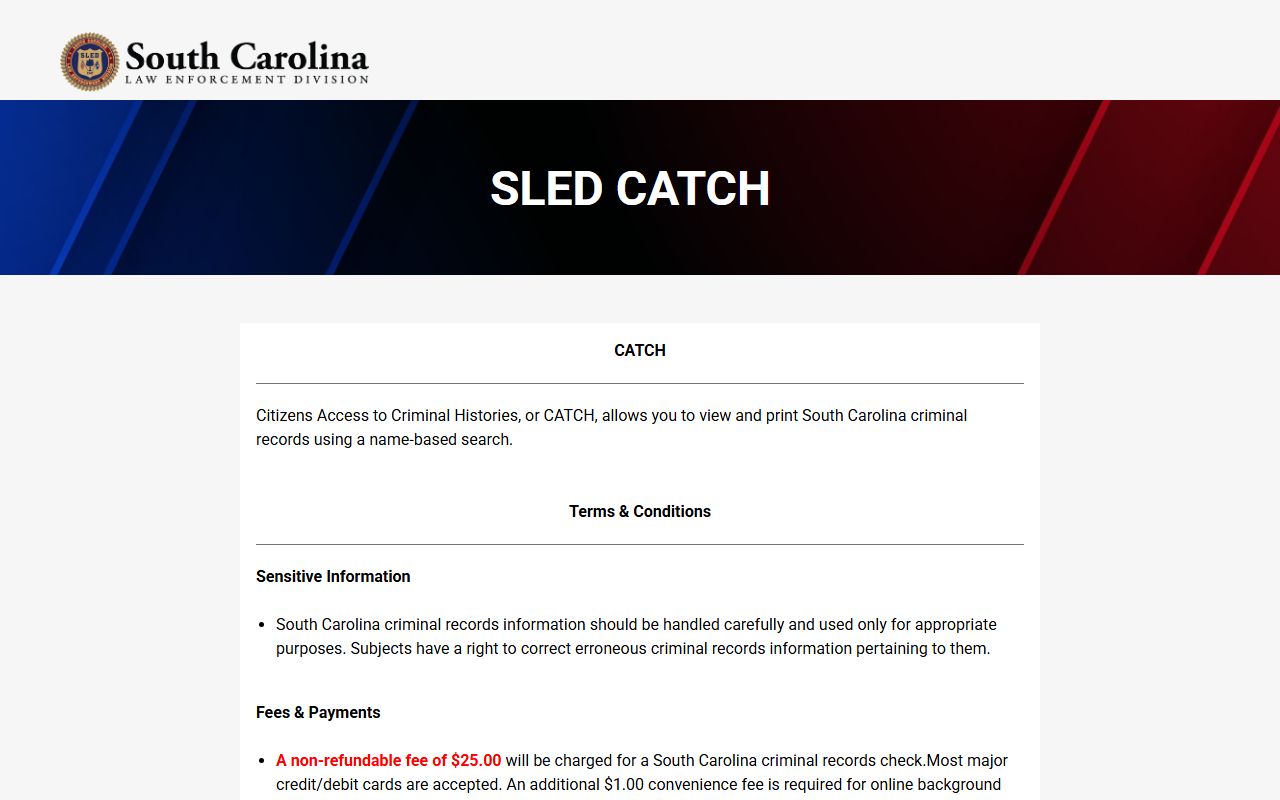
Use it for statewide criminal-history context, then verify Union County case details with the court record that created the charge or disposition.
The South Carolina sex offender registry is another separate state system, not a court charge index.
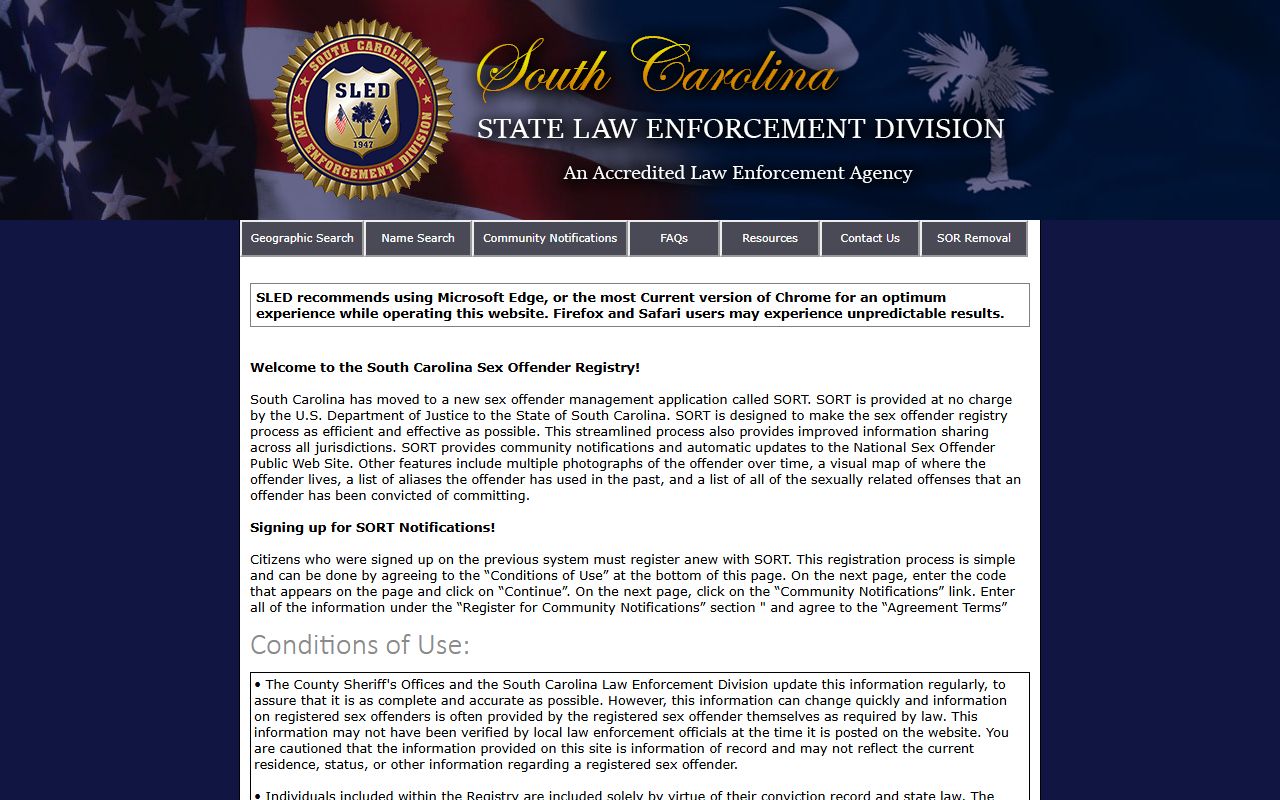
A registry search may reflect registration status, but it does not replace the court file that explains the conviction, sentence, or charge history.
Defense and Public Defender Contacts
The South Carolina Commission on Indigent Defense county list shows Union County in Circuit 16 with public defender phone 864-319-1315. The 16th Circuit Public Defender Office page states that it represents qualifying individuals charged with criminal offenses in York and Union County. This matters for charges after arrest because bond, preliminary hearings, plea decisions, and General Sessions prosecutions can move quickly.
The SCCID county public-defender list is an official statewide source for Union County public defender contact information.
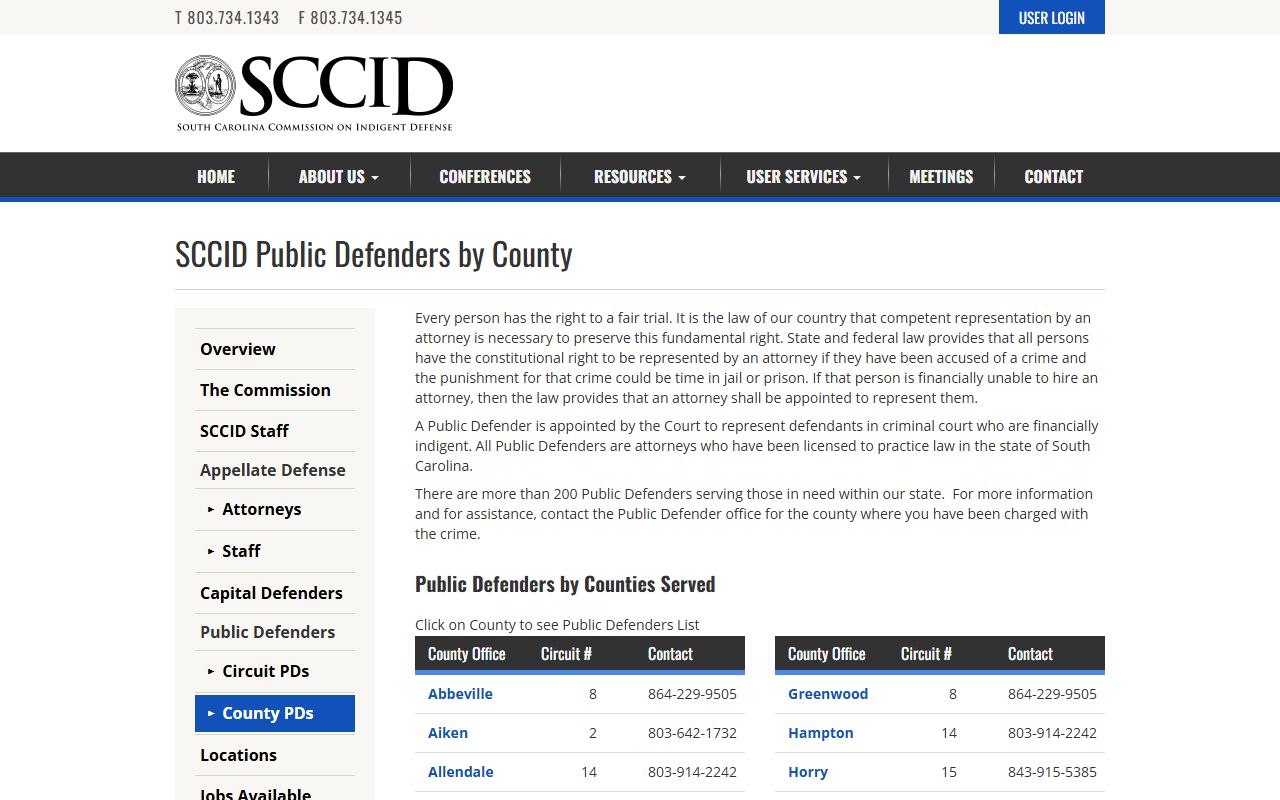
It is useful when the charge record shows a pending criminal matter and the person may qualify for appointed counsel.
The 16th Circuit Public Defender page gives the local representation scope for York and Union counties.
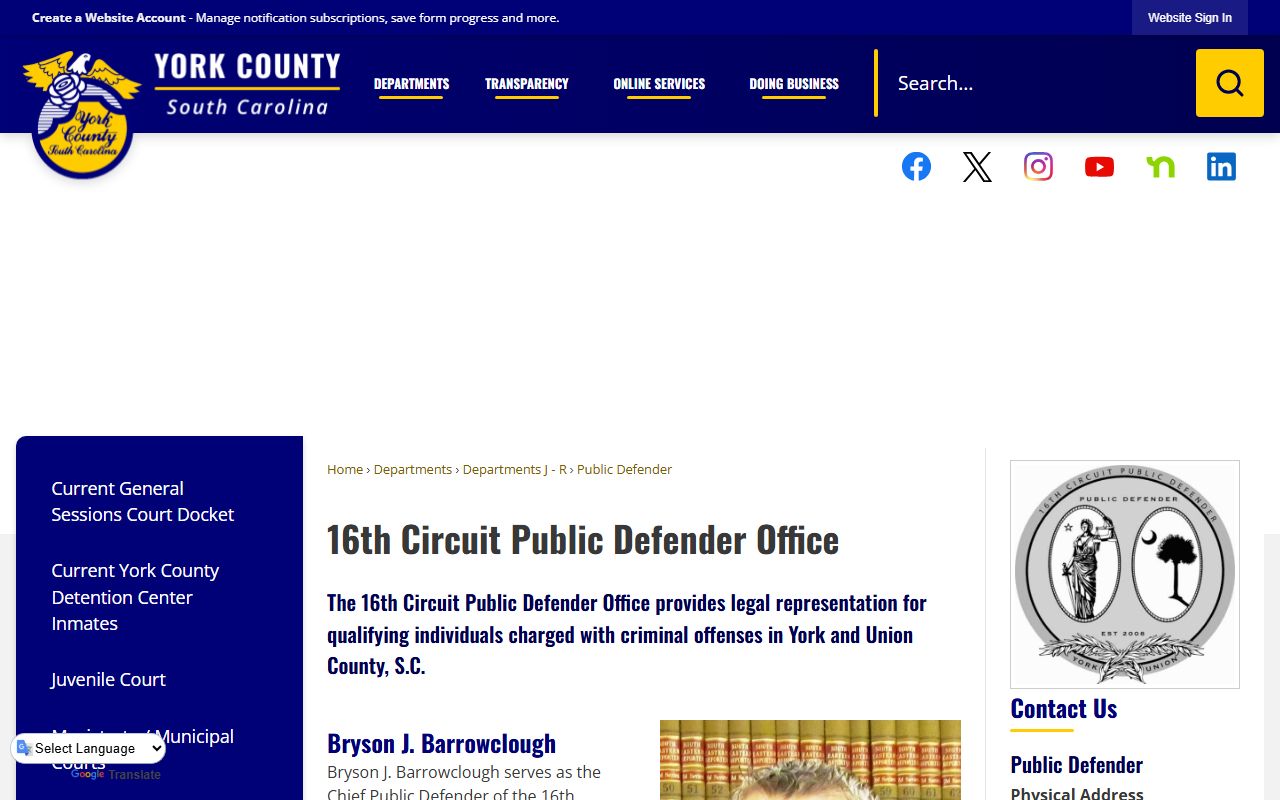
Defense contact information should be separated from record lookup: the court record explains what is filed, while counsel advises on what to do next.
Background Check Considerations
Arrest records, charge records, court dispositions, jail custody data, sex offender registry records, and criminal-history reports serve different purposes. A charge does not prove guilt. A jail listing does not prove the final court outcome. A SLED report is not a wanted-persons search. Employment, housing, credit, insurance, and other regulated screening uses require proper FCRA-compliant procedures and cannot be based on casual public lookup alone.
Important: This site is not a consumer reporting agency and arrest or charge lookup information must not be used for FCRA-regulated screening.
Restricted Charge Records in Union County
Restricted records include juvenile charges, sealed cases, expunged arrests or charges, adoption records, sensitive Family Court material, mental-health and chemical-dependency commitment records, victim and witness data, and personal identifiers. The Public Index also no longer displays home address information for new and existing cases as of January 1, 2026. If a charge was dismissed, nolle prossed, sealed, or expunged, public lookup may show limited information or no record at all.