
Criminal Court Records in Union County
The main felony and higher-level prosecution file in Union County is a Circuit Court General Sessions record. The Sixteenth Judicial Circuit Solicitor prosecutes General Sessions criminal cases for York and Union counties, and the Union County Clerk of Court maintains the court file. General Sessions records can include indictments, warrants or charging documents, bond information, appearances, motions, pleas, dispositions, sentencing orders, probation conditions, and docket entries.
Lower-level criminal matters may start or remain in Union County Magistrate Court or a Municipal Court. The Magistrate Court issues arrest and search warrants, conducts bond hearings, holds preliminary hearings for General Sessions cases, and hears summary criminal and traffic cases. City of Union Municipal Court and Jonesville Municipal Court handle municipal criminal, ordinance, and traffic matters within their jurisdictions. The full case file belongs in the court channel; current custody belongs in the jail channel.
How to Search Union County Criminal Court Records
Start with the South Carolina Judicial Branch Case Records Search and choose Union County, which the state lists as Circuit 16, County 44. The Union County Public Index is the online case-record endpoint, but it requires cookies and JavaScript, and some browsers need popup exceptions for case detail. If the online search is unavailable or incomplete, contact the Clerk of Court at 210 West Main Street, Union, SC 29379, phone 864-429-1630.
- Open the state case-records search page and select Union County.
- Search by case number when possible, or use the defendant name and date range offered by the live Public Index.
- Confirm whether the case is General Sessions, Magistrate, or Municipal because each court level has different records.
- Read the docket and disposition, but do not treat a single charge line as proof of conviction.
- Request certified copies from the Clerk or the originating court when the record is needed for legal use.
SLED CATCH is a separate name-based South Carolina criminal-history report, not a court file and not a wanted-person search. The Sheriff's inmate portal can show current custody or held-for agency information, but it is not the full prosecution file. For charge-specific context after arrest, see Union County arrest records and court charges.
Stages of a Criminal Case
A criminal record changes as the case moves from arrest or citation toward court action. A person may first appear in bond court or Magistrate Court, then a General Sessions prosecution may open if the Solicitor files or pursues higher-level charges. Docket entries should be read chronologically because charges can be added, amended, reduced, dismissed, nolle prossed, or resolved by plea or trial.
Case flow: Arrest or citation › Warrant, bond, or preliminary hearing › Charges filed › Arraignment or first appearance › Pretrial motions › Plea or trial › Disposition › Sentencing or probation.
| Stage | What Happens |
|---|---|
| Bond or preliminary hearing | Magistrate Court may set bond and conduct preliminary hearings tied to General Sessions cases. |
| Charges filed | The prosecutor or court receives the formal charge document, indictment, or summary charge information. |
| Pretrial and motions | The docket may show appearances, continuances, motions, orders, and negotiations before plea or trial. |
| Plea or trial | The defendant may plead, proceed to trial, or receive a charge-by-charge disposition. |
| Sentencing | The record may show jail, prison, probation, fines, costs, restitution, or other sentence terms. |
The Union County Solicitor page is an official local source for the prosecutor's General Sessions role.
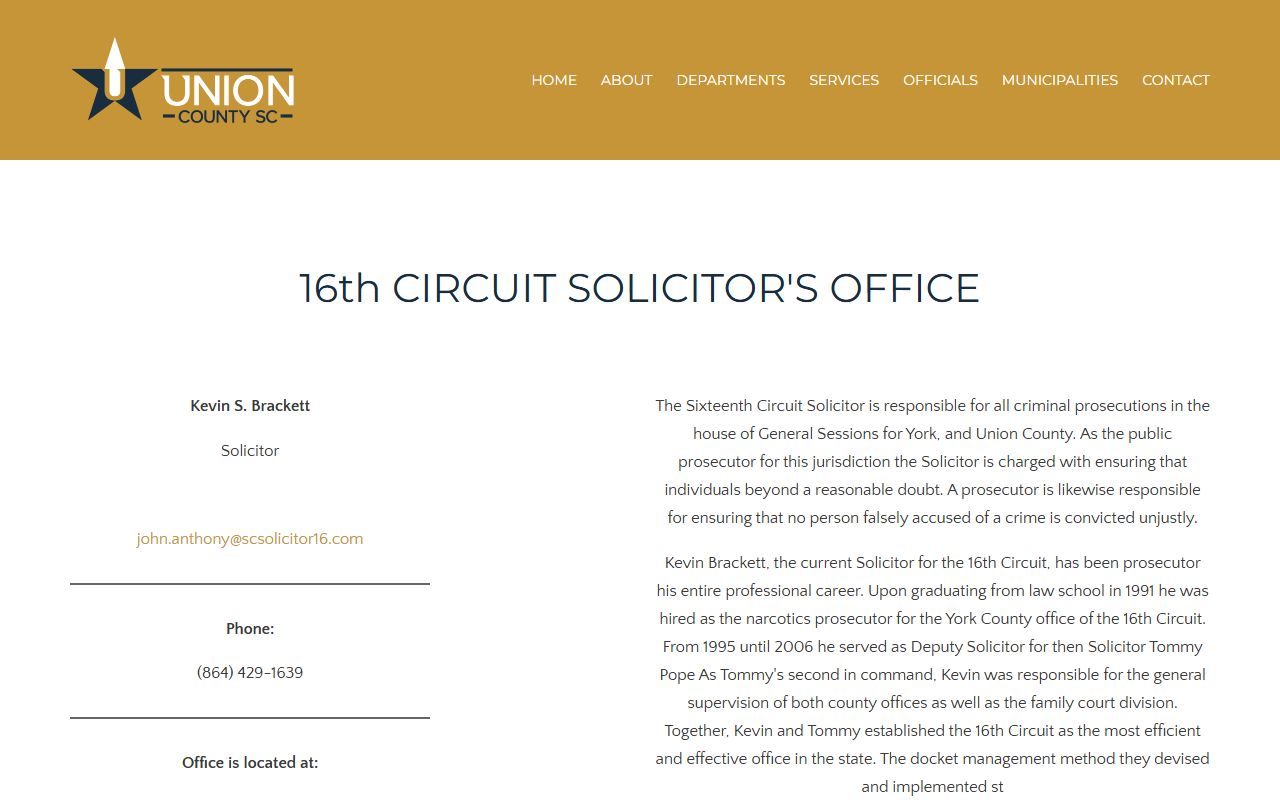
That office context helps separate a prosecution record from a jail booking or police incident record.
What a Union County Criminal Court Record Shows
The court record can include charge, party, event, and outcome fields. Some details are redacted by law, court rule, or policy. The South Carolina Judicial Branch has also removed home address display from the Public Index as of January 1, 2026.
| Field | What It Shows |
|---|---|
| Case number | The court's official identifier for search, docket review, and copy requests. |
| Defendant | The person accused in the criminal case, with public address details limited or removed. |
| Charges | Charge description, statute or ordinance, agency, bond context, or level where public. |
| Docket events | Hearings, motions, continuances, orders, plea dates, trial settings, or sentencing entries. |
| Plea | The defendant's formal response or negotiated plea status where entered. |
| Disposition | Guilty, not guilty, dismissed, nolle prossed, disposed, transferred, or another outcome. |
| Sentence | Probation, incarceration, fines, assessments, costs, restitution, or related conditions when public. |
Charges vs. Convictions
A charge is an accusation. A conviction is an outcome after a guilty plea, verdict, or other qualifying final result. Union County criminal court records can show charges that were dismissed, reduced, amended, or nolle prossed, so a record user should read each charge line and final disposition instead of assuming every charge became a conviction.
| Charge | Conviction | |
|---|---|---|
| Stage | Filed or alleged before final outcome | Final result after plea or verdict |
| Proof level | Accusation or probable-cause stage | Beyond a reasonable doubt or admitted by plea |
| Record effect | May appear even if later dismissed | May affect sentence, probation, fines, and criminal history |
| Expungement issue | Some dismissed or nolle prossed charges may qualify | Eligibility depends on statute and offense history |
Reading Dispositions and Sentences
Disposition terms are case-specific. "Dismissed" generally means the court ended that charge without a conviction. "Nolle prossed" means the prosecutor declined to continue prosecution of that charge. "Guilty" may follow a plea or verdict. "Not guilty" is an acquittal. A sentence entry may include jail, prison, probation, fines, assessments, restitution, or conditions. For Magistrate and Municipal cases, summary court records can have different terminology and online visibility than General Sessions files.
Sealed vs. Expunged Records
Restricted criminal records are not missing by accident. Juvenile records are not ordinary public records. Expungement removes a qualifying criminal conviction or charge from public access by sealing or destroying state records of the arrest, charge, or conviction through court order. Sealing restricts public visibility, while expungement is a more specific statutory process for qualifying records.
| Sealed | Expunged | |
|---|---|---|
| Public visibility | Restricted from ordinary public access | Removed from public access and sealed or destroyed as ordered |
| Common examples | Juvenile, sensitive, or court-restricted records | Eligible dismissed, nolle prossed, not-guilty, juvenile, or statutory criminal matters |
| Process | Law or court order controls access | Application through the solicitor or summary court process, depending on case type |
The Judicial Branch expungement overview explains the statewide process.
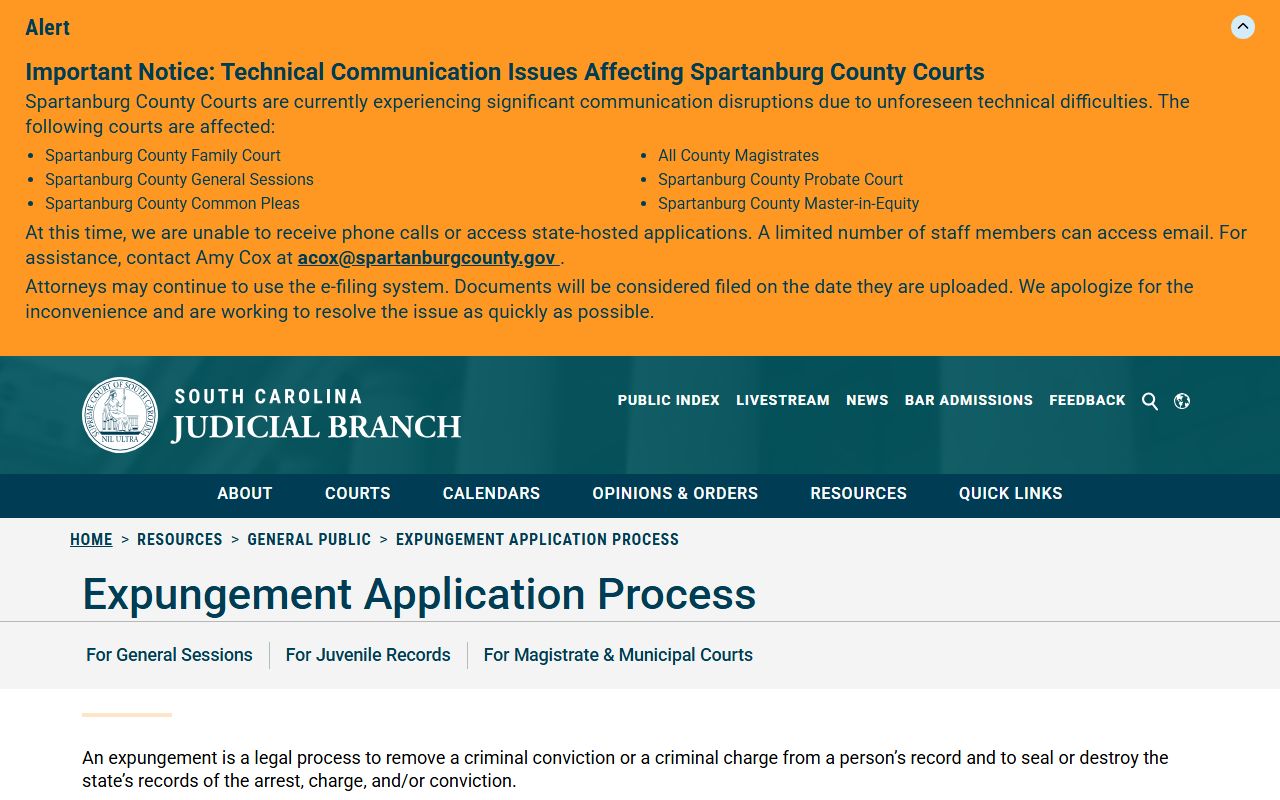
Use that overview with Union County's Sixteenth Circuit Solicitor contact because General Sessions expungements are routed through the circuit solicitor.
The General Sessions expungement page describes the solicitor, SLED eligibility check, signature, and order flow.
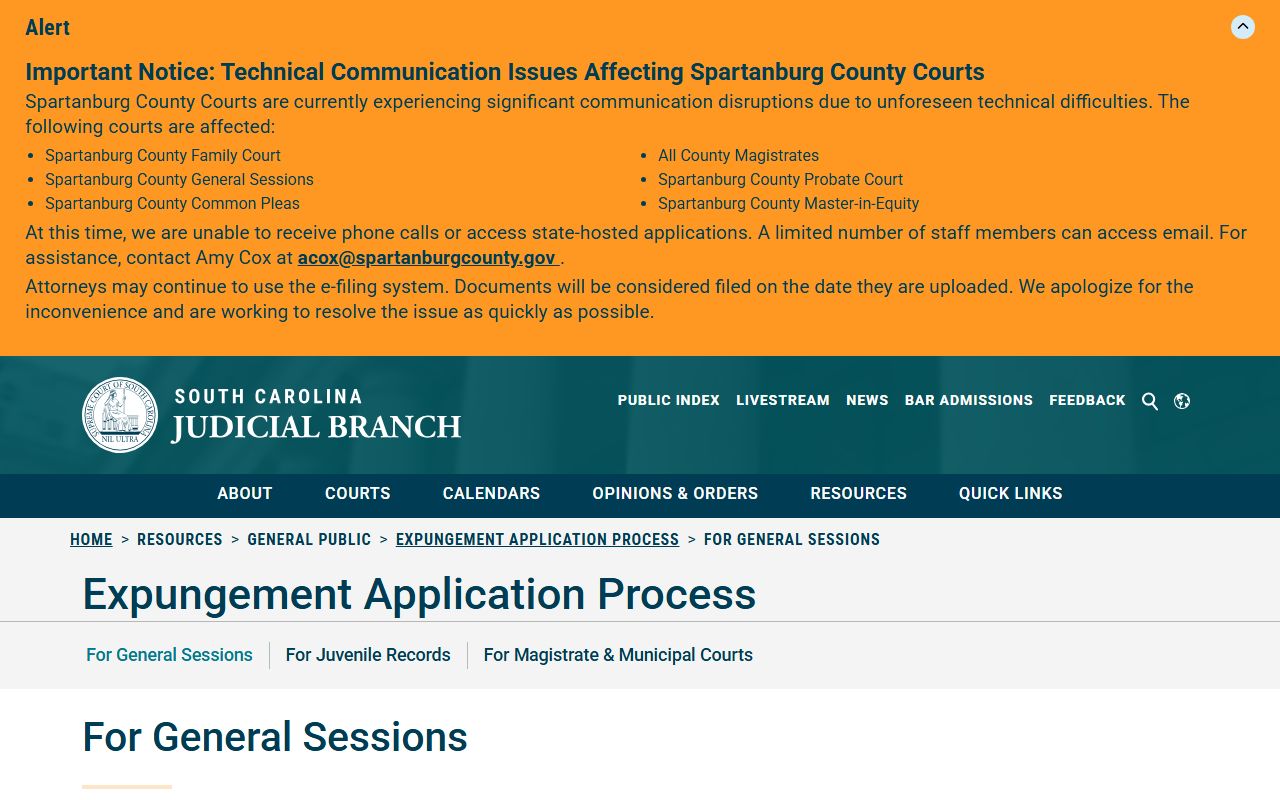
This is the relevant channel when a Union County felony or higher-level criminal case was prosecuted in General Sessions.
Magistrate and Municipal Court expungement guidance is separate.
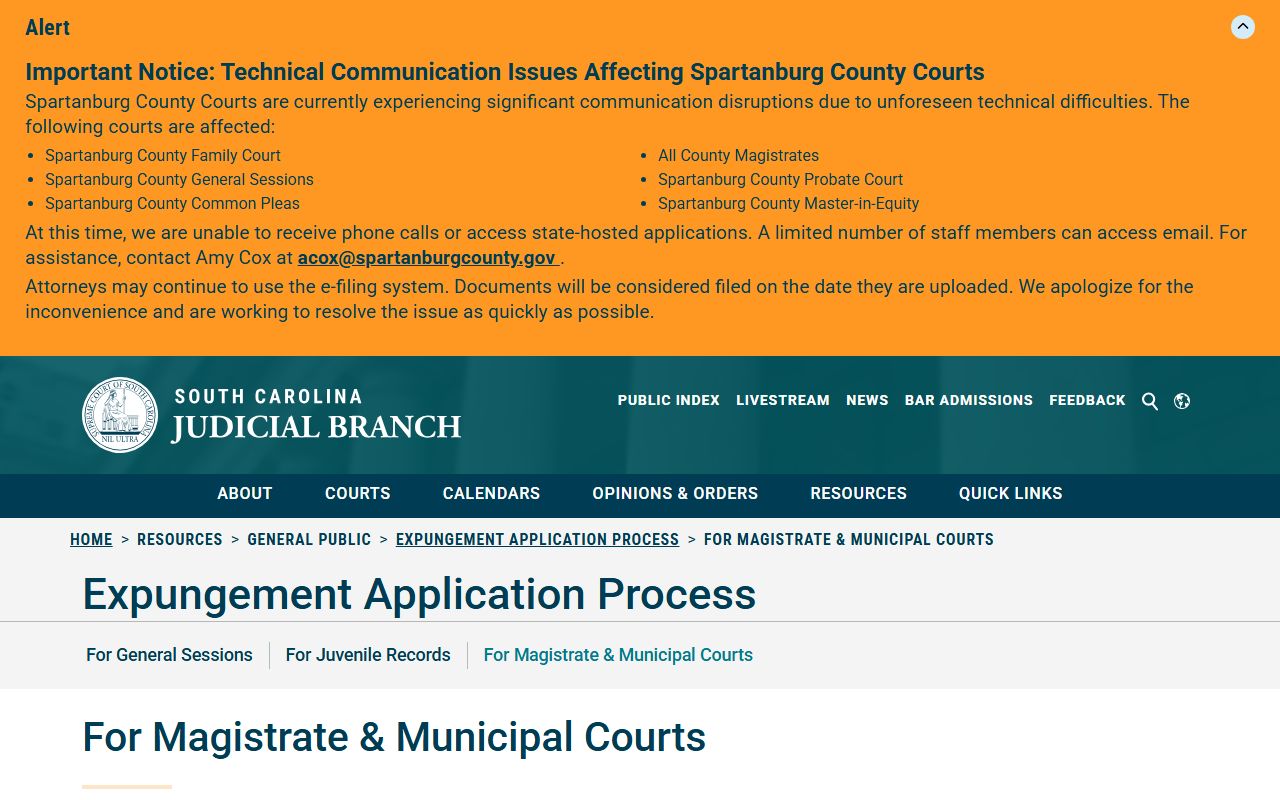
That distinction matters for Union County summary offenses because Magistrate or Municipal records do not always follow the same process as General Sessions cases.
Public Access to Criminal Court Records
South Carolina FOIA, Title 30, Chapter 4, supports access to nonexempt public records, while Title 30, Chapter 1 requires custodians to preserve public records. Court access still follows court-specific confidentiality rules. Juvenile matters, sealed records, expungements, mental-health material, victim or witness details, and sensitive personal identifiers may be withheld or redacted.
Key Statutes:
S.C. Code Title 30, Chapter 4 supports inspection or copying of nonexempt public records under reasonable rules.
S.C. Code Title 17, Chapter 22 includes South Carolina expungement provisions for eligible criminal records.
Solicitor and Public Defender Context
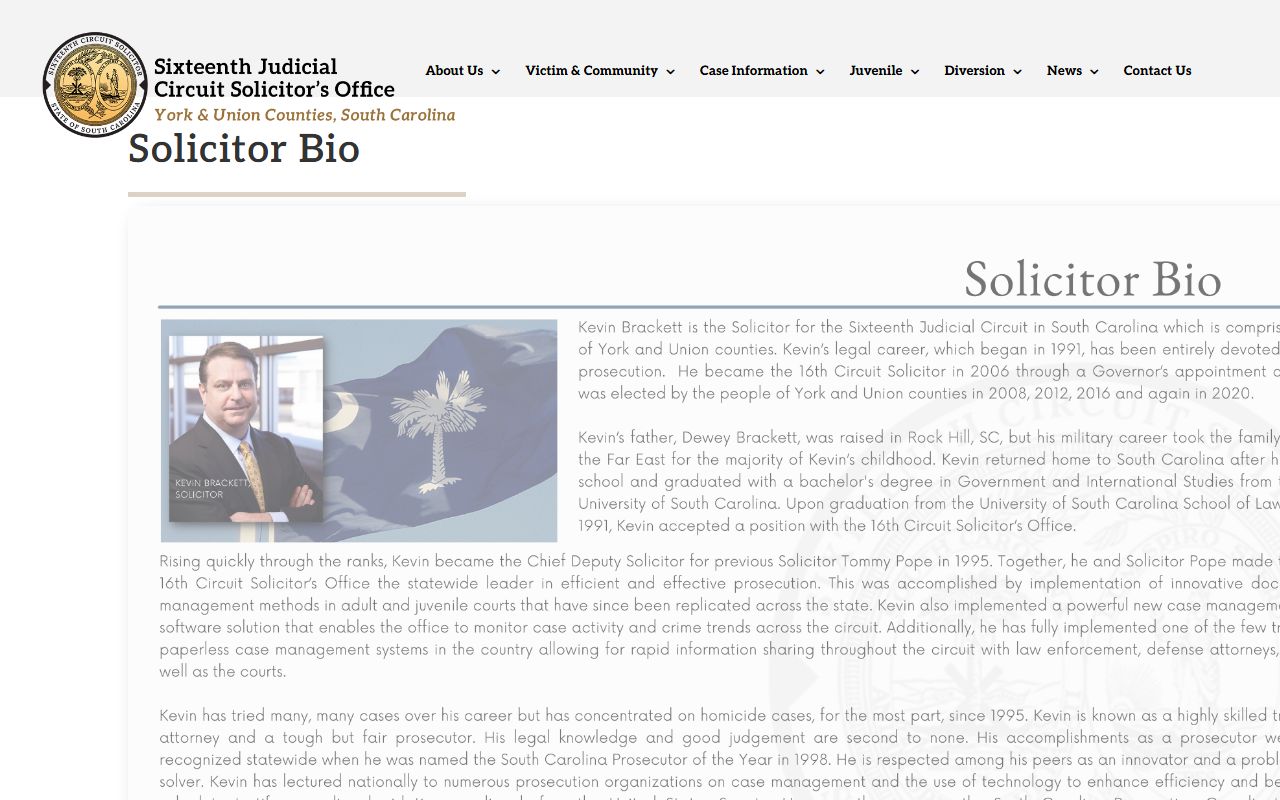
The Sixteenth Judicial Circuit Solicitor is Kevin S. Brackett. The Union County office page lists the Union office at 210 West Main Street, Union, SC 29379, phone 864-429-1639. The solicitor's site also lists a main York office and topics including expungements, domestic violence, diversion, mental health court, and Traffic Education Program.
The Sixteenth Circuit Solicitor homepage is the broader source for York and Union prosecution information.
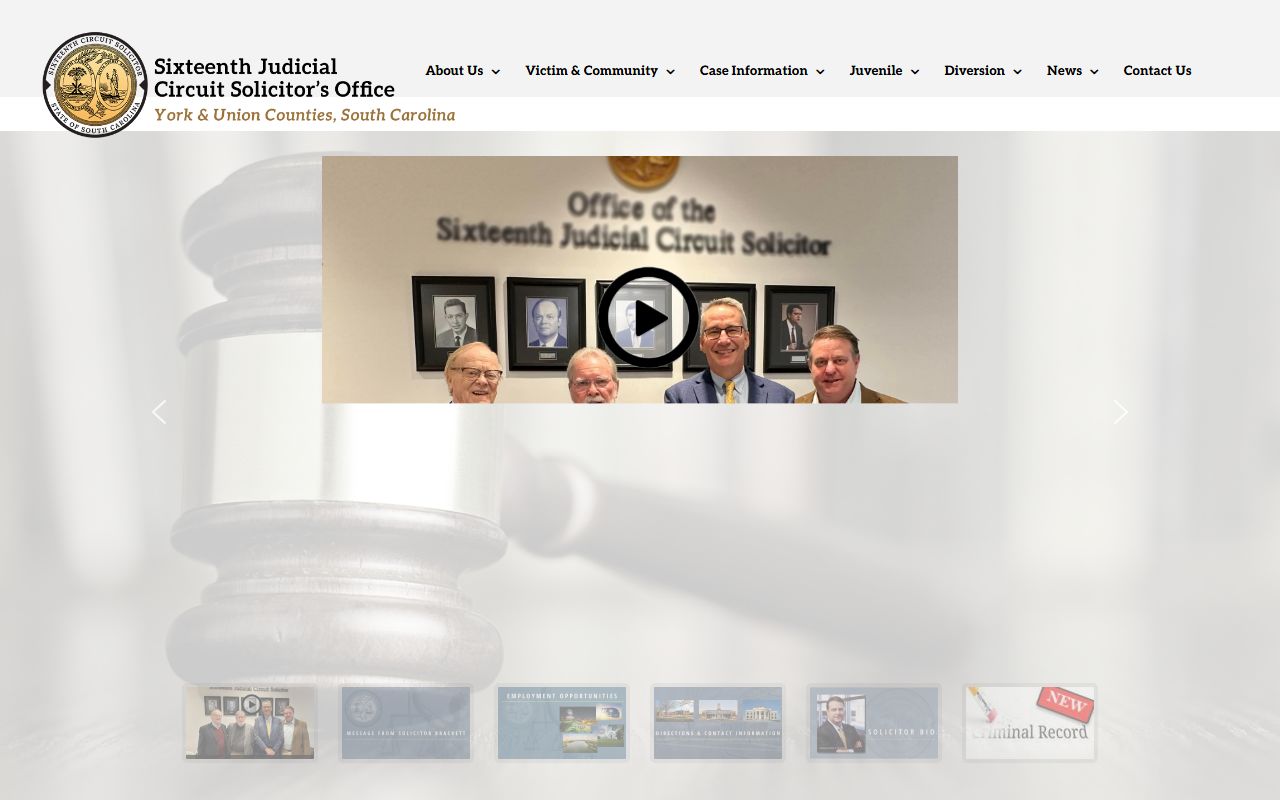
Solicitor information helps explain why a court record may show prosecution events that are not controlled by the Sheriff's Office or jail.
The solicitor biography page confirms Kevin Brackett's circuit role.
For defense representation, the South Carolina Commission on Indigent Defense lists Union County in Circuit 16 with public defender phone 864-319-1315.
Background Check Considerations
Court records, SLED CATCH reports, jail custody records, and commercial background checks are not interchangeable. A court docket may show charges and disposition. SLED CATCH is a state criminal-history tool and does not include wanted-person information. A jail portal shows custody status and can change quickly. Employment, tenant, credit, insurance, and other regulated screening uses require FCRA-compliant sources and procedures.
Important: This site is not a consumer reporting agency and court lookup information must not be used for FCRA-regulated screening.