
Union County Traffic Ticket Search
The statewide South Carolina Traffic Ticket Search covers tickets issued in Summary Court and some Municipal Court traffic ticket records. In Union County, that matters because Magistrate Court conducts traffic hearings, including Driving Under the Influence and Driving Under Suspension, while municipal courts handle city or town tickets. The state tool is best for a citation that fits the Summary Court or participating municipal court path.
The SC Judicial Branch Traffic Ticket Search is the manifest source for the statewide citation search interface.
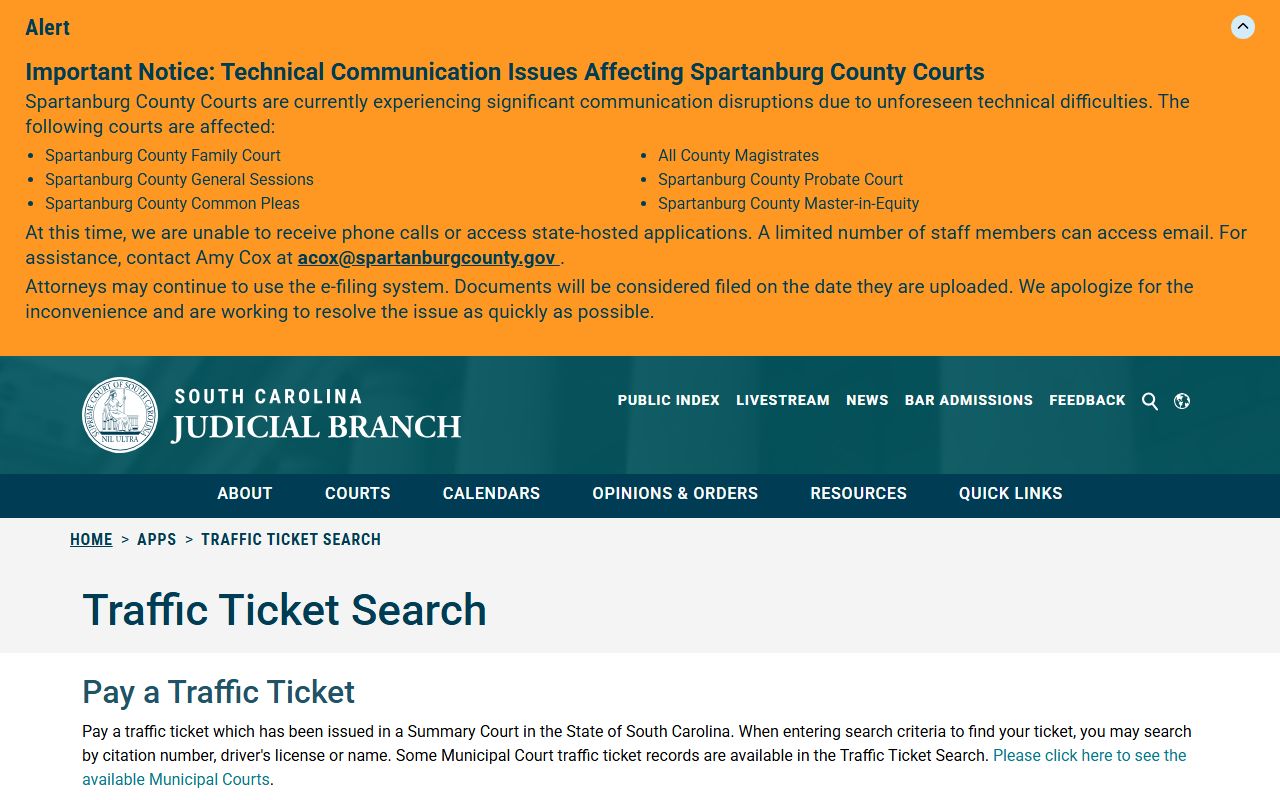
The state search is useful for case location and ticket status, but the issuing court still controls appearances, payment eligibility, and contested hearing steps.
| Field Label | Type | Required | Options / Format Notes |
|---|---|---|---|
| Citation Number | Text | Yes for citation search | The state page says citation number is required. |
| Driver's License | Text | Yes for license search | Driver's license number and state are both required. |
| State | Dropdown | Yes for license search | Includes South Carolina and other listed U.S. states. |
| First Name | Text | Yes for name search | Required with last name and date of birth. |
| Last Name | Text | Yes for name search | Required with first name and date of birth. |
| Date of Birth | Date | Yes for name search | Required with first and last name. |
| Buttons/tabs | Segmented search modes | n/a | Search by Citation, Driver's License, or Name. |
Union County Municipal Tickets
City of Union Municipal Court handles traffic, parking, speeding, and other tickets through its official nCourt payment page. The court is listed at 215 Thompson Blvd., Union, SC 29379, phone 864-429-1713, fax 864-429-1728. This city portal is not a full court-record archive. It is a payment search for City of Union Municipal Court citations and cases.
The City of Union Municipal Court nCourt page is the manifest source for the local citation and case payment search.
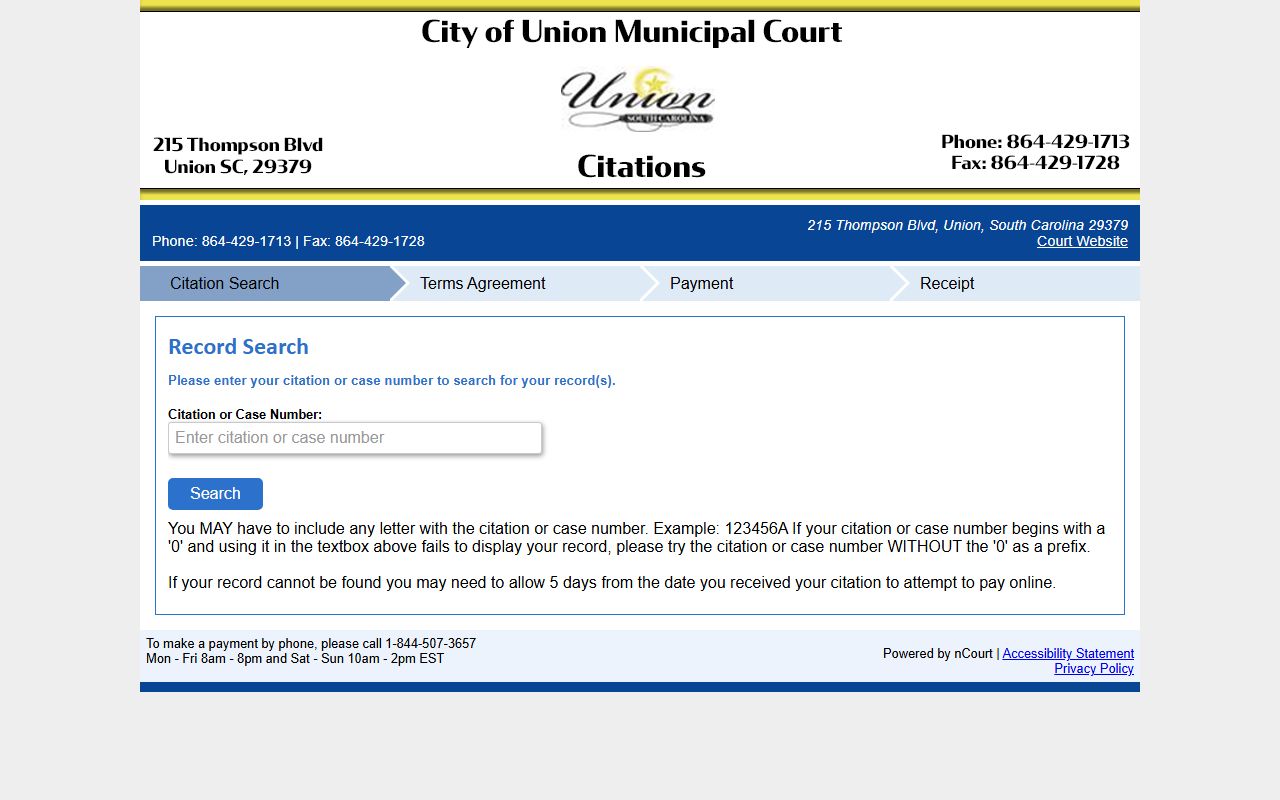
If the payment page cannot locate a ticket, the research says to wait at least five days for City of Union nCourt records, then call the court.
| Field Label | Type | Required | Options / Format Notes |
|---|---|---|---|
| Citation or Case Number | Text | Yes | May need to include a letter, such as 123456A. If a leading zero fails, try without the zero. |
| Buttons/steps | Workflow | n/a | Citation Search, Terms Agreement, Payment, Receipt. |
| Payment phone | Phone channel | n/a | 1-844-507-3657, Monday-Friday 8 a.m.-8 p.m., Saturday-Sunday 10 a.m.-2 p.m. EST. |
Union County Traffic Courts
The issuing court controls what happens next. Union County Magistrate Court conducts traffic hearings, including DUI and driving under suspension. City of Union Municipal Court handles city traffic, parking, speeding, and other municipal tickets. Jonesville Municipal Court exists for Jonesville municipal matters and is listed by the South Carolina Judicial Branch with Chief Judge Robert M. Hines.
| Court | Traffic Cases Handled | Contact |
|---|---|---|
| Union County Magistrate Court | Traffic hearings, DUI, driving under suspension, summary court matters | 210 West Main Street, Union, SC 29379; 864-429-1648 |
| City of Union Municipal Court | Traffic, parking, speeding, municipal tickets and payments | 215 Thompson Blvd., Union, SC 29379; 864-429-1713 |
| Jonesville Municipal Court | Jonesville municipal matters | 131 North Main Street, Jonesville, SC 29353; 864-674-5746 |
Use the citation, agency, or court name to pick the right office. A ticket issued inside a city may not follow the same payment route as a county Magistrate Court ticket.
Union County Traffic Record Fields
A court traffic record is the case record for the citation. It can show the charge or violation, issuing court, payment status, court date, fines, costs, disposition, and failure-to-appear consequences. It does not replace a certified SCDMV driver record, and it does not always show the long-term license effect of a conviction.
| Field | What It Shows |
|---|---|
| Citation or Case Number | The identifier used by the court or payment portal. |
| Issuing Court | Magistrate Court, City of Union Municipal Court, Jonesville Municipal Court, or another summary court. |
| Charge / Violation | The traffic offense, ordinance, or statute tied to the ticket. |
| Court or Payment Status | Whether the ticket is payable, pending, disposed, or requires court contact. |
| Court Date | The appearance date when listed by the court or roster system. |
| Fines and Costs | Money due through the court or payment vendor, if payable online. |
| Disposition | The result, such as paid, dismissed, guilty, not guilty, or another court outcome. |
| Failure-to-Appear Consequences | Bench warrant, payment, or license consequences that must be checked with the issuing court. |
Pay or Contest Tickets
The SC.gov traffic ticket payment guide explains the statewide payment workflow. Select the county or municipality, enter the case number or ticket number and last name, then use Locate Case. The guide says case number and ticket number are the same for this workflow and warns not to enter spaces between letters and numbers. After a case is found, use Confirm Payment, enter cardholder information, and choose whether to provide an email receipt.
The SC.gov traffic ticket payment guide is the manifest source for the state payment workflow and formatting cautions.
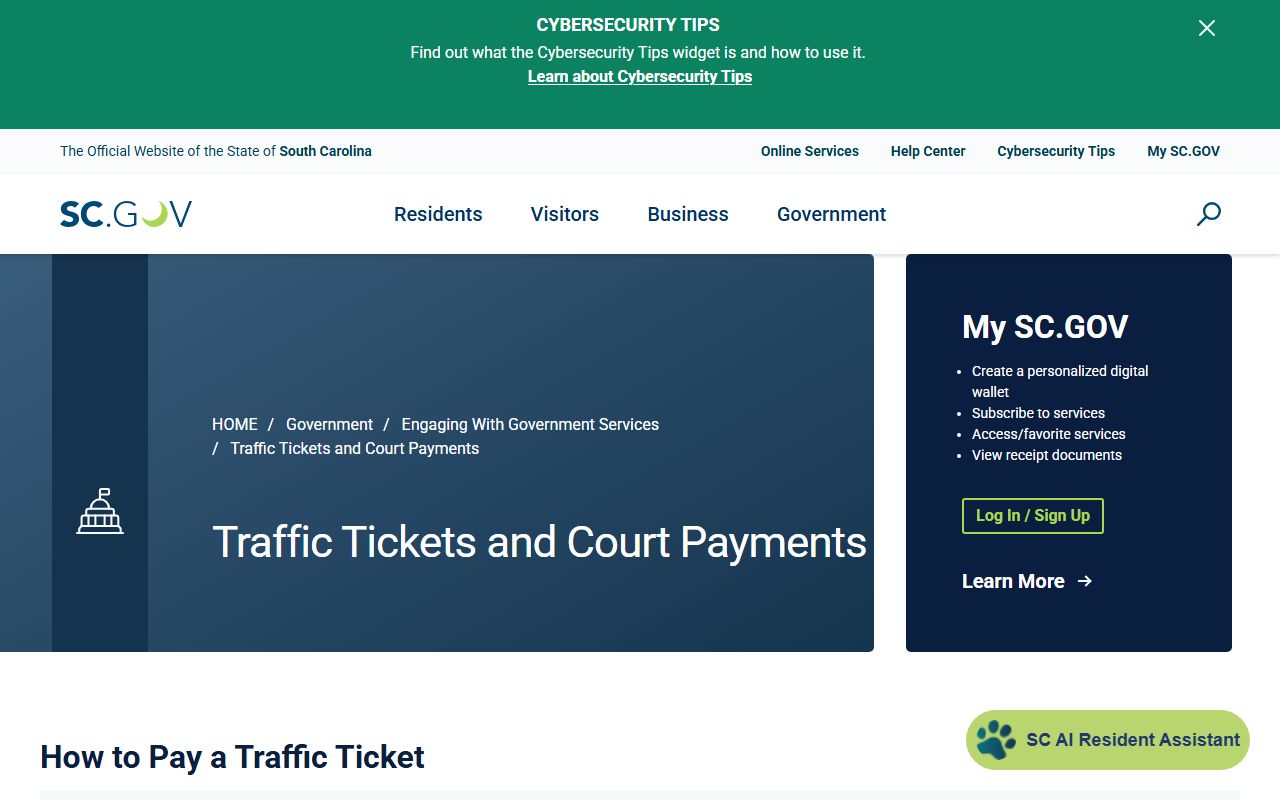
The payment guide is for payable matters. It does not replace the court when a person wants to contest a ticket, when the charge requires appearance, or when the search returns no record.
- Identify the issuing court from the citation: Magistrate Court, City of Union Municipal Court, Jonesville Municipal Court, or another Summary Court.
- Search the statewide Traffic Ticket Search for Summary Court tickets or the City of Union nCourt page for City of Union citations.
- If paying online, follow SC.gov or nCourt instructions and confirm citation or case number formatting.
- If contesting, contact the issuing court before the appearance date because online payment is not the same as contesting.
- For DUI, driving under suspension, CDL consequences, bond, or jail risk, treat the matter as a court case.
- If no record appears, wait at least five days for City of Union nCourt records and then call the court.
- For failure to appear or failure to pay, check with the issuing court about bench warrant or license consequences.
Court Record vs Driver Record
The court traffic record and the SCDMV driver record are separate files. The court record explains the citation case. The driver record explains license history, points, convictions, suspension status, and certified driver-record data after court or agency action is reported. A court payment may close the ticket, but it does not mean points or license effects disappear.
| Record Type | Source | What It Shows | How to Access |
|---|---|---|---|
| Court Traffic Record | Magistrate or Municipal Court | Citation/case number, issuing court, charge, court status, court date, fines, disposition, and failure-to-appear issues | SC Traffic Ticket Search, City of Union nCourt, or issuing court |
| State Driver Record | SCDMV | Driver-license history, points, convictions, suspensions, and certified driver-record data | SCDMV points summary or certified driver record tools |
The SCDMV points system page explains that points are reduced by half after one year from the violation date.
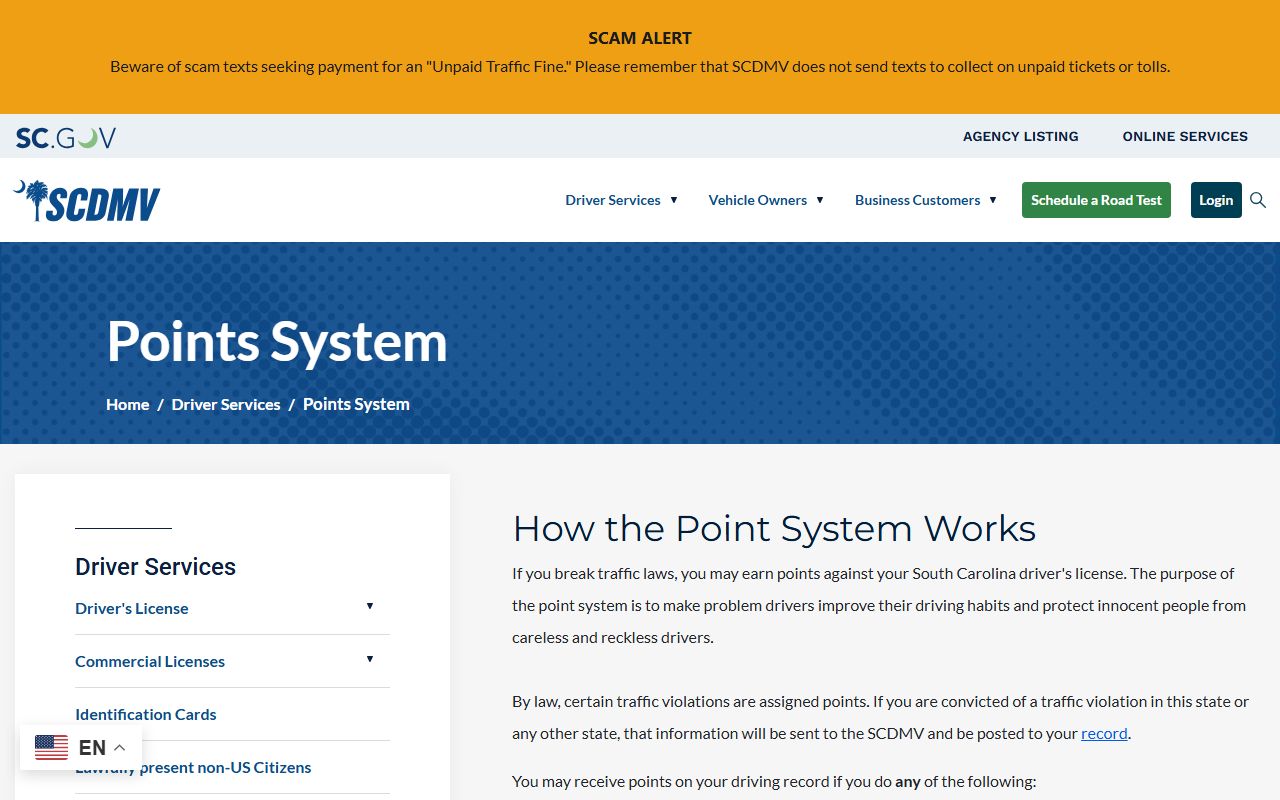
Use the court for case status and SCDMV for license status, because each office maintains a different record.
SCDMV Driver Records
The SCDMV driver-record page offers a free points summary and a certified driving record transaction. The research also identified the SCDMV online transaction list, which includes Driver Record Points Summary and Obtain Your Certified Driver Record. Exact certified-record fields were not inspected, so the safe distinction is that SCDMV is the license-history source, while Union County courts are the traffic case source.
The SCDMV driving-record page is the manifest source for state driver-record access.
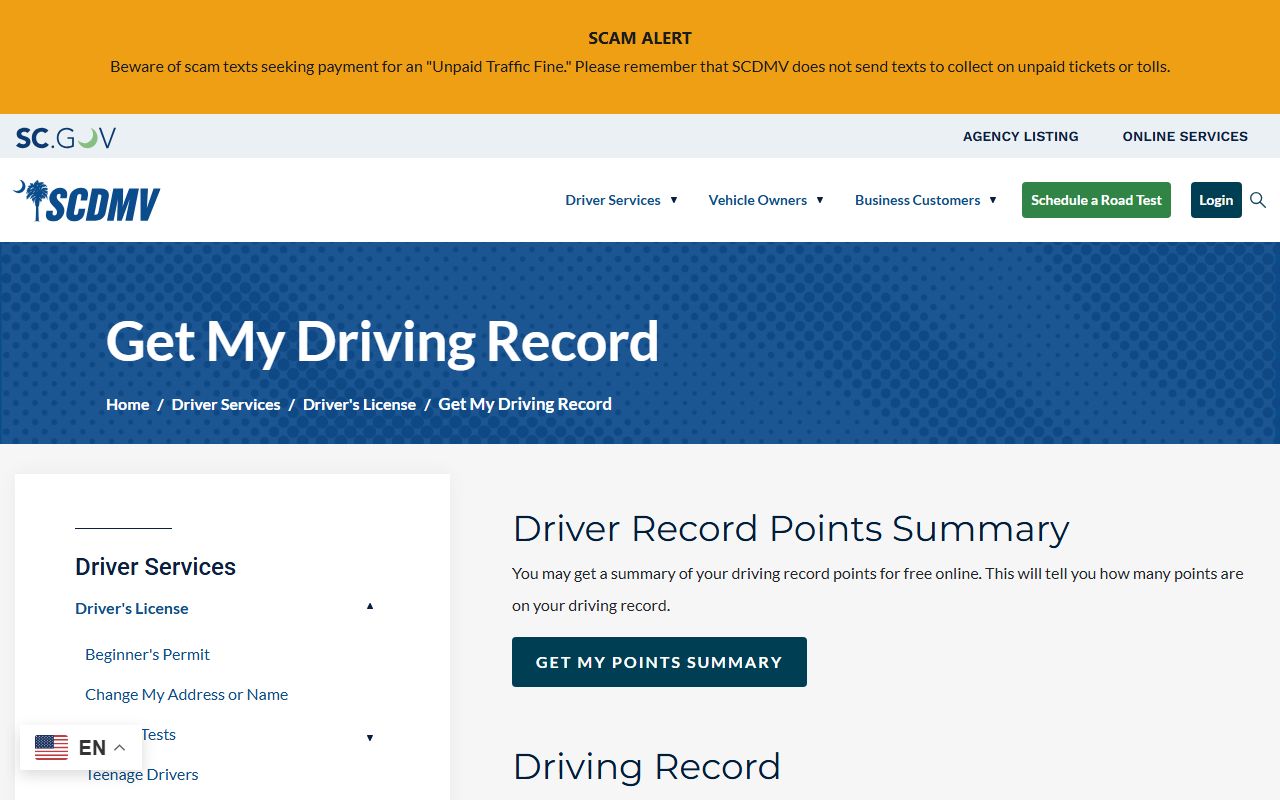
When the question is points, suspensions, or a certified license-history record, SCDMV is the correct source even if the ticket began in Union County court.
| Tool | Use | Access Notes |
|---|---|---|
| Driver Record Points Summary | Free points check | Shows how many points are on the driving record. |
| Certified Driver Record | Certified license-history transaction | Paid SCDMV online transaction; exact fields not inspected. |
| Points System | Point rules | Explains point reduction after one year and links to a 10-year driving record. |
Union County Traffic Education
The Sixteenth Circuit Traffic Education Program is the official diversion program identified for Union County's judicial circuit. The solicitor site states that TEP was established in South Carolina to educate drivers while giving them an opportunity for eligible tickets. The research did not capture Union-specific application cutoff, fee, or local acceptance steps, so eligibility should be confirmed with the program before assuming a ticket qualifies.
The Sixteenth Circuit Traffic Education Program page is the manifest source for the official diversion option serving the circuit.
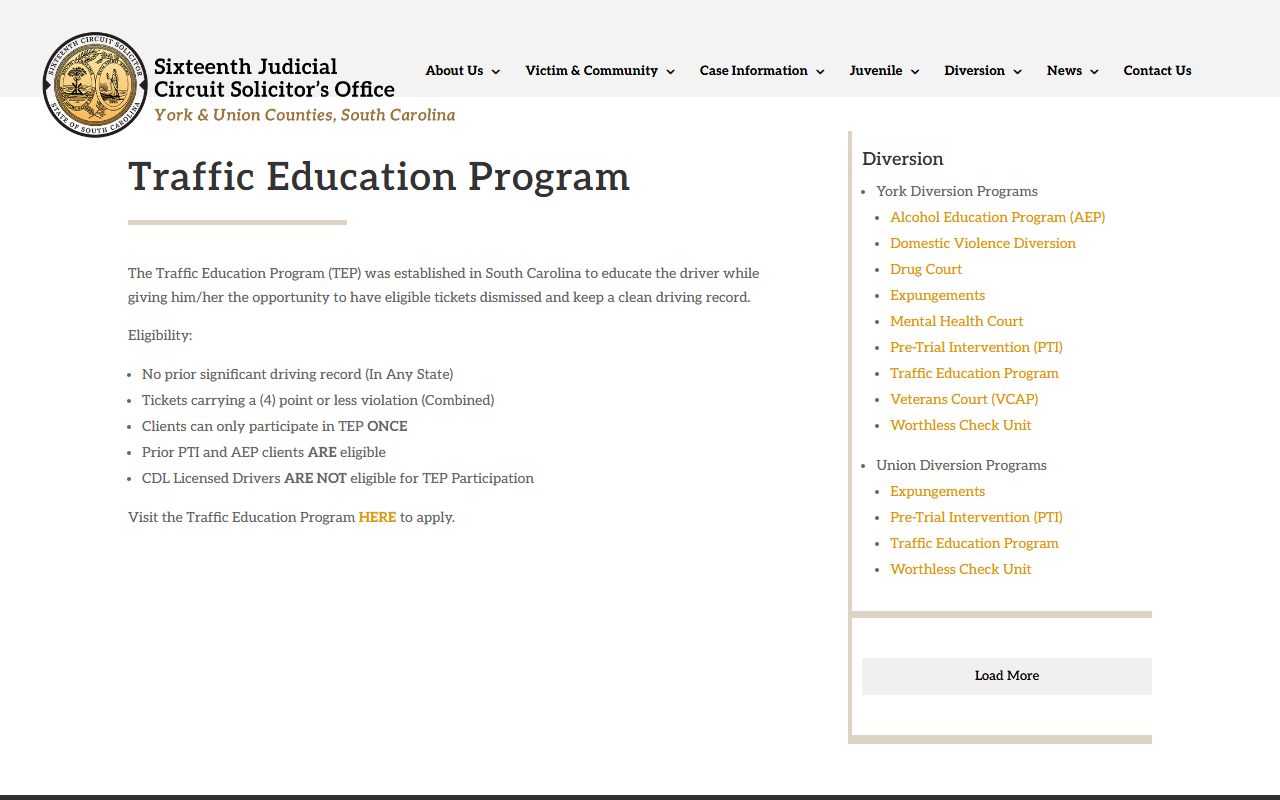
TEP is a program path for eligible tickets, not an automatic dismissal, and it should be addressed before paying or pleading on the ticket.
Union County DUI and CDL
DUI, driving under suspension, commercial driver issues, possible jail, and bond consequences should be treated as court cases rather than simple payment problems. Union County Magistrate Court conducts DUI and driving-under-suspension traffic hearings. A CDL holder may face employment and license effects that are not visible from the payment portal alone. The driver-record impact belongs with SCDMV, but the charge, appearance, and disposition belong with the court.
For full criminal-case context after a serious traffic charge, see Union County criminal court records. That distinction matters because a traffic ticket can begin as a citation but later involve bond, court appearances, criminal disposition, or sentencing fields.
Union County Traffic Access
South Carolina public access rules support inspection and copying of nonexempt public records, but traffic records still follow court and agency procedures. S.C. Code Title 30, Chapter 4 covers public-record access and exemptions. S.C. Code Title 30, Chapter 1 concerns preservation and security of public records. Court-specific restrictions, sealed records, juvenile records, and expungement orders can limit what appears online.
For expungement, the research points to S.C. Code Title 17, Chapter 22 and South Carolina Judicial Branch expungement materials. Summary court criminal records may be expunged for certain not-guilty, dismissed, or nolle prossed cases, subject to exceptions. A paid or closed traffic ticket is not automatically removed from every public or driver record. Confirm the process with the court or solicitor path that applies to the disposition.
Key point: A court correction should be handled with the issuing court, while a license-history correction starts with SCDMV.